
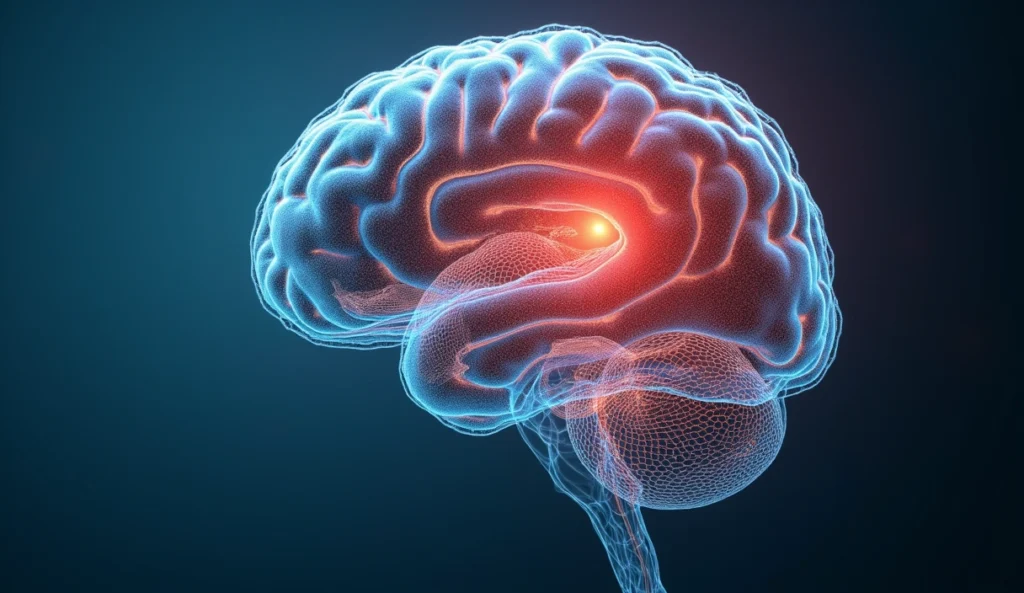
New research presented at The Menopause Society’s 2025 Annual Meeting sheds light on why many women experience brain fog, mood shifts, and forgetfulness during menopause. The findings indicate that menopause is not only a hormonal shift but also a neurological one. The brain appears to be remodeling itself in real time, rather than signaling decline.
Researchers reviewed studies published between 2020 and 2025 to understand how hormonal changes influence the female brain. Menopause leaves visible marks on brain structure but also sparks signs of adaptation and repair.
During the menopausal transition, gray matter, the brain tissue responsible for memory, focus, and decision-making, tends to shrink in regions including the frontal and temporal cortices and the hippocampus. This helps explain why many women describe a mental fog or trouble concentrating.
MRI scans also show that women who experience early menopause or frequent hot flashes often develop more white matter hyperintensities, or bright spots, which indicate subtle stress or reduced blood flow in the brain. These can affect cognition and mood, especially under chronic hormonal fluctuation.
Some studies show that gray matter can partially recover after menopause once hormones stabilize. The brain seems to reorganize and strengthen its communication networks.
The hormones-brain connection
Estrogen plays a role in brain health. It helps regulate blood flow, supports synaptic connections, and protects neurons from inflammation. During menopause, when estrogen levels fluctuate dramatically, the brain works to recalibrate. Researchers found that certain brain regions increase their estrogen receptor density during menopause, as if the brain is turning up the volume to hear hormonal signals more clearly.
Supporting brain health during menopause
Exercise has been shown to boost brain health. Strength training and aerobic movement improve blood flow, increase growth factors in the brain, and help regulate insulin and inflammation.
Sleep disruptions are common in menopause, but quality rest is essential for memory consolidation and brain repair. Maintaining a consistent sleep schedule and reducing light exposure before bed may help.
Anti-inflammatory, Mediterranean-style eating patterns rich in omega-3s, leafy greens, berries, and polyphenol-rich foods have been shown to support cognition and reduce oxidative stress. Examples include salmon, walnuts, blueberries, and olive oil.
Social interaction stimulates neural circuits, boosts mood, and helps buffer against cognitive decline. Connection with friends, community, or purpose-driven work is considered as vital for the brain as nutrition or exercise.
An editor’s note in the article recommends that women consult expert-backed insights on hormone therapy treatment options, timing, and building a personalized plan that supports long-term health. Women are encouraged to talk to their doctor about hormone therapy.
Menopause marks a profound biological shift, but it is not a signal of loss. It is a period of transformation. The latest science confirms that while the brain changes during this time, it also adapts, reorganizes, and recovers. With the right habits, support, and awareness, women can help their brains emerge stronger and more resilient.